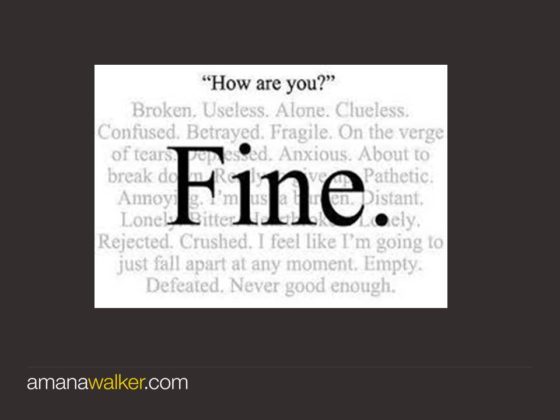
Every year (well, since it was first used in a PR campaign in 2005 by holiday firm Sky Travel), the third Monday (this year, 18th January) in January is proclaimed to be ‘Blue Monday’.
Based loosely on a calculation, it’s supposed to be the day when we are the most fed up due to a culmination of; Christmas being a distant memory (and we’re still paying off the debt from our overspending), the realisation that we have already failed in our attempt to stick to New Year’s Resolutions (again), the cold, gloomy weather and the effect the dark days are having on our mood, and if we do have a job, we’re still a long way off payday.
Oh yes, and this year we also have the added dark cloud of Covid hanging over us.
Individually, the things above are enough to make anyone feel low, but collectively, they hit us hard.
‘Blue Monday’ the signs to watch out for
So how do we know that we are suffering from the effect of this depressing day?
Well, there are definitely signs to watch out for and here are a few examples that you might recognise:
- You’re feeling low, and sluggish. You’d rather stay on the couch.
- It doesn’t take much to ‘fire you up’ into an argument; an ordinary comment made in a conversation would do it.
- You don’t achieve much when working – due to your productivity levels being low, not because of lack of work.
- You don’t have a job and the prospects aren’t rosy.
- You’d rather avoid talking to people. Anyone.
- Comfort food/alcohol is your preferred choice, even when you know it’s not good for you. What the heck!
- Although you want to be ‘positive’, you can’t find a reason to be.
And then all of the above is compounded further by the anxiety that Covid brings, we worry about catching it, we worry about spreading it and we fear for our loved ones.
It’s not like we can rely on popping out and meeting our friends for a coffee either; that usually mood- boosting every day activity has been taken away from us. This year, we are isolated in our homes up and down the country, waiting for normality to return.
Some of us have peace and quiet – which can be an enormous help or a benefit that’s now wearing too thin. And others are surrounded by work or family (or both) and there’s no escape from the noise.
But how much of ‘Blue Monday’ is real?
As much as it sounds feasible, the science behind it isn’t actually real. The equation used to calculate the day was formulated by a psychologist, based on a set of assumptions on how we are probably feeling on this date every year – and more importantly – how likely we would be to book a holiday (remember, it was for a holiday firms PR campaign).
But the date changes every year, so how real can it be?
The truth is, although it’s not scientifically accurate even though many of us are feeling the ‘symptoms’. Blue Monday isn’t real, but feeling blue definitely is.
So there are some things that can’t be disputed; how we feel mentally, emotionally and physically. Especially in January. Especially this year.
And more importantly, anxiety and depression can’t and shouldn’t be boxed into one day – as sufferers know all too well, it can last for so much longer than that.
How we can help ourselves
So regardless of the Blue Monday label, how can we help ourselves if we are struggling with anything like the symptoms listed?
A search online will throw up plenty of suggestions and sources we can turn to, but here are a few tips:
- Getting some fresh air, daily. Even if it’s for 10 mins it will help lift your mood.
- Managing through the dark days, which affects some people way more than others (SAD = Seasonal Affective Disorder) is helped by having access to light.
That could mean a dose of sunshine, having the light streaming in through your windows, or even buying a small SAD lamp that mimics the effect of real light.
- Eating well (fresh fruit and veg) and drinking plenty of water.
- Watching something funny on TV or online. Laughter is therapy.
- Talking to someone: a friend, family, colleague or someone who you know will listen. Even the shortest chat can help us feel connected and more resilient.
- And more than ever this year, asking for help (either professional or otherwise) could well be a life changer. Don’t hesitate.
A word about positivity
As a coach, I know the benefits of taking a positive outlook on life, making the most of the good things we have, and of course being grateful.
But when I hear people spouting ‘just be positive’, sometimes even I feel like I could slap them for it, because for goodness sake, when you feel really low, ‘being positive’ is just not that easy is it?
Only you know how you are feeling and it can take time, help and new behaviours to ‘switch’ into positive thinking mode.
Some days, we really don’t feel like doing anything and that’s OK. Don’t compare yourself to others, know that social media isn’t always your friend and cut yourself some slack.
However, other than the tips above, there is something we can all try and this also helps us build resilience and that is; awareness of our thoughts and managing that negative inner voice.
Listen to yourself and challenge the thoughts that are not helpful to you. Don’t always believe the stuff that swirls around your head – question whether your thoughts are factual or just your mind on overdrive.
And rather than trying to think positively, think optimistically. We can tell ourselves that we know things will get better, and that we know we will soon feel better.
So as Blue Monday hits us for another year, it is a reminder (not that we need one) that with so much going on around us, no wonder we feel blue.
But that doesn’t mean we should suffer; why should we – haven’t we had enough already?
I reckon any day is a good day to start making a change in how we are feeling. Why not make that start today?
Kicking Blue Monday into touch could be the catalyst we need.
Yeah, just the thought of that makes me feel better.
Amana
The Spotlight Coach
People under Pressure